Tujia New Year
Introduction
Tujia New Year is the most important traditional festival celebrated by the Tujia ethnic group in China. Recognized for its unique customs and rich cultural expressions, Tujia New Year was inscribed on the National List of Intangible Cultural Heritage of China in 2011.
History
The Tujia New Year has deep historical roots and reflects the cultural identity of the Tujia people, who predominantly reside in the Wuling Mountain region spanning the provinces of Hunan, Hubei and Guizhou, as well as Chongqing municipality. With a population of over 8 million, the Tujia people have preserved this festival as a vital part of their heritage.
After the founding of the People's Republic of China, the government of the Xiangxi Tujia and Miao autonomous prefecture in Hunan province officially designated Tujia New Year as a local statutory holiday, granting residents a day off to celebrate. Unique among ethnic festivals, Tujia New Year typically occurs one day earlier than the Spring Festival.
Traditional Customs
The Tujia New Year is marked by a variety of vibrant customs, reflecting the deep cultural traditions of the Tujia people. Key activities include:
Preparing New Year Supplies: Families meticulously prepare for the celebrations by gathering ingredients, decorations, and gifts.
Festive Feasts: The family banquet, or "Tuan Nian Fan", takes place a day before the Spring Festival, symbolizing unity and prosperity.
Visiting Relatives and Friends: Social visits are an integral part of the celebrations, strengthening familial and community bonds.
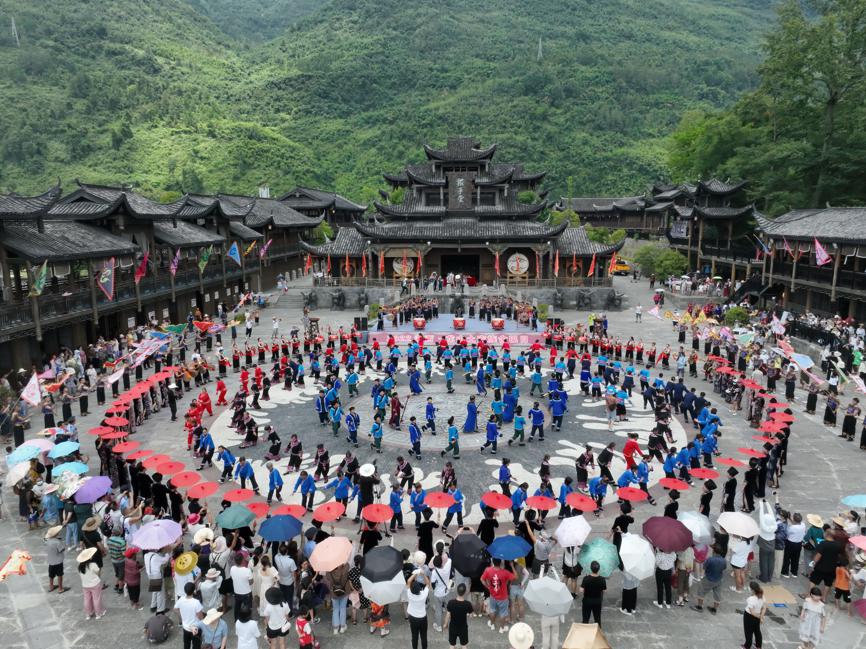
Baishou Activities: Central to the Tujia New Year is the Baishou ("Hand-Waving") activities, a cultural highlight involving large-scale gatherings. While the timing and scale vary by village, common activities include:
Rituals for Blessings: Practices to expel evil spirits and invite good fortune.
Ancestral Worship: Paying homage to ancestors through prayers and offerings.
Singing and Dancing: The Baishou Dance, a traditional performance characterized by synchronized hand movements, vibrant attire and rhythmic songs, is a cultural spectacle that unites the community.
Cultural Significance
The Tujia New Year serves as a profound expression of ethnic identity and community cohesion. Its rituals and customs offer valuable insights into the history and folk traditions of the Tujia people. The festival not only strengthens social ties but also preserves and perpetuates traditional Tujia art forms, music and dance.
Scholars consider Tujia New Year a living repository of cultural knowledge, providing critical data for the study of Tujia history. Its recognition as a national intangible cultural heritage underscores its importance as a cultural treasure for China.
Modern Celebrations
In contemporary times, Tujia New Year continues to thrive, blending traditional customs with modern influences. Government support and tourism initiatives have amplified its visibility, attracting visitors eager to experience its unique traditions.
Local governments and cultural organizations have also organized events to promote the festival, including performances of the Baishou Dance and exhibitions of Tujia crafts and cuisine. These efforts not only preserve the cultural essence of Tujia New Year but also contribute to its evolution as a dynamic and inclusive celebration.
Through the fusion of ancient traditions and modern adaptations, Tujia New Year remains a vibrant testament to the enduring cultural legacy of the Tujia people.








